


New York, USA – Malawi has challenged the UN and major industrial polluters to move beyond rhetoric and fully capitalize the UN Fund for Responding to Loss and Damage through grant-based financing rather than debt-creating instruments.
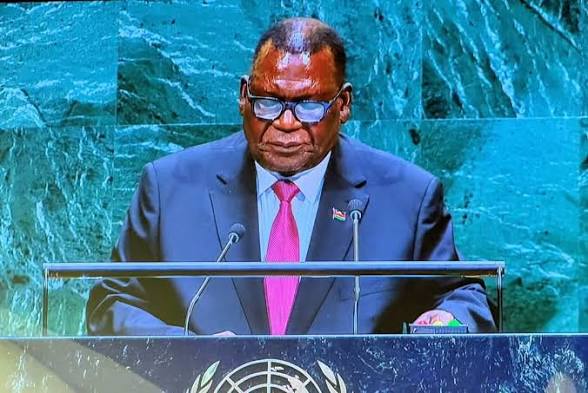
Speaking during the 81st United Nations General Assembly (UNGA) in New York on Monday (28 September 2026), Minister of Foreign Affairs George Chaponda warned world leaders that frontline developing nations cannot build climate resilience while struggling under debt burdens.
According to Chaponda, developing countries contribute negligibly to global greenhouse gas emissions yet continue to bear the heaviest physical and economic shocks of global warming.
“Major historical and current emitters must honor their climate finance commitments by providing accessible, predictable, grant-based, and highly concessionable financing, rather than relying on debt-creating instruments that further burden vulnerable countries already struggling to cope with the consequences of a crisis they did little to cause,” Chaponda urged.
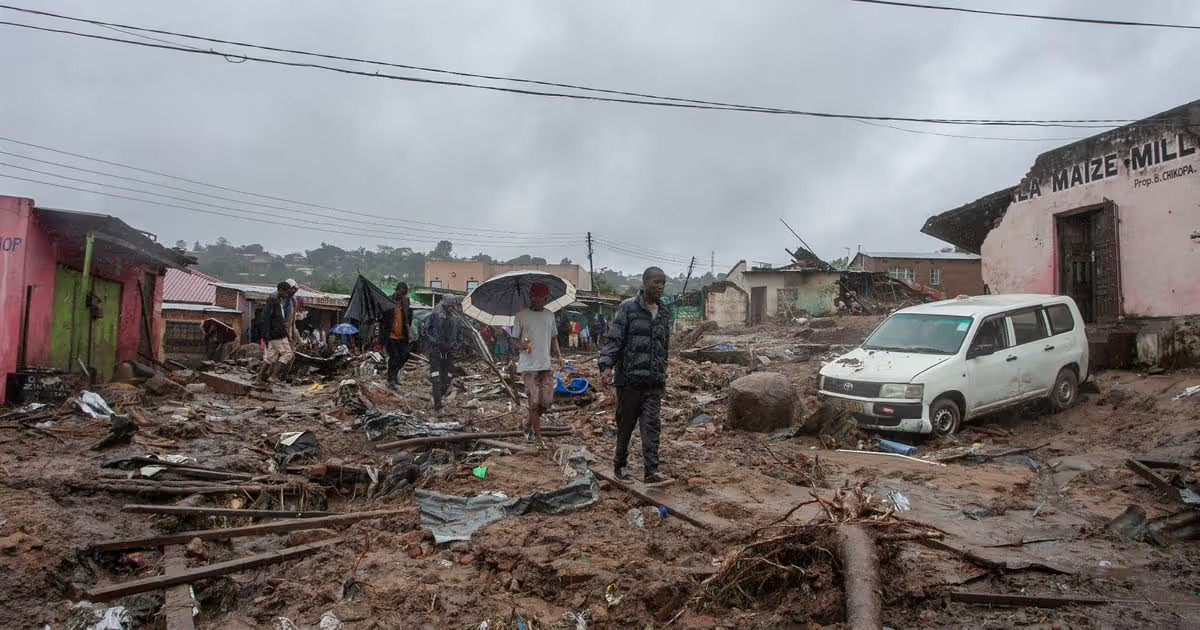
The physical impact of these recurring disasters was highlighted by Tropical Cyclone Freddy, which affected over 2.2 million people and displaced at least 659,278 people across southern Malawi.
The disaster killed about 679 people, left 537 missing, and caused an estimated $500 million in direct damages across local communities.
In recent months, the country has also faced severe El Niño-driven droughts, which have ruined crop yields and threatened food security.
Addressing the limits of local adaptation measures, Chaponda noted that the velocity and magnitude of climate shocks routinely erase hard-won development gains.
“Climate change is an existential threat to Malawi’s development and to the hard-won gains we have made,” Chaponda declared.
The UN Fund for Responding to Loss and Damage was established to assist low-income nations facing severe weather disruptions linked to global climate change.
While Malawi has embedded adaptation goals into its Malawi 2063 national blueprint under Pillar 1: Agricultural Productivity and Commercialization and Enabler 7: Environmental Sustainability, government officials stress that international climate finance must transition away from debt-inducing loans.
Chaponda warned that forcing climate-impacted nations to borrow funds to recover from natural disasters deepens the global debt crisis, making an immediate shift toward direct, grant-based climate finance an urgent necessity.
“Major historical and current emitters must honor their climate finance commitments by providing accessible, predictable, grant-based, and highly concessionable financing, rather than relying on debt-creating instruments that further burden vulnerable countries already struggling to cope with the consequences of a crisis they did little to cause,” said Chaponda.
Malawi’s appeal comes amid wider calls from developing countries urging major historical emitters to meet their global obligations.
Malawi officially joined the United Nations on December 1, 1964, shortly after gaining independence in July of the same year.