

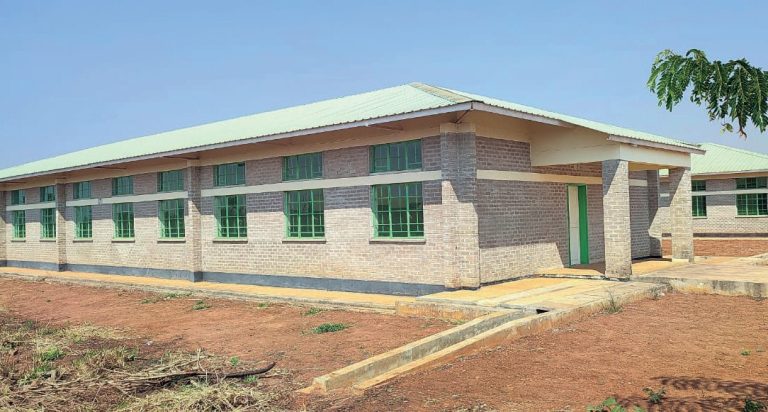
A dispute over an estimated K1.3 billion in unpaid construction costs has left newly completed student hostels and staff housing at Mchinji Teachers Training College (TTC) unused, severely constraining the institution’s capacity to train desperately needed primary school teachers.
Seven hostel blocks remain locked because the contractor, S.R. Nicholas, is withholding handover until the government settles outstanding bills. Consequently, Mchinji TTC is accommodating just over 400 student-teachers despite being built to house 600, effectively denying accommodation to roughly 210 additional trainees each year.
Confirming the standoff, Ministry of Education Principal Secretary Ken Ndala acknowledged that the completed structures remain under the contractor’s control.
“The government owes the contractor money for completed works, but this remains a contractual matter,” Ndala said, as ministry sources revealed the outstanding debt has climbed to K1.3 billion, inclusive of accumulated interest.
Ndala noted that Treasury has engaged the National Audit Office to verify the contractor’s claims, while funds have been allocated in the 2026/27 budget to hire consultants for additional works, including drainage, covered walkways, and principal accommodation.
S.R. Nicholas Administration Director Andrea Bizzaro confirmed the company’s decision to retain custody of the facilities.
“We have withheld the handover of the hostels and staff houses until the government settles its outstanding obligations,” Bizzaro stated, adding that the company had previously completed government projects without receiving full payment and was unwilling to hand over property while another payment dispute remained unresolved.
While donor partners fully funded components like classrooms and administrative blocks, the withheld structures fall under the government’s unpaid 30 percent counterpart contribution.
The impasse directly undermines national efforts to address an acute primary education deficit. With 5.2 million public primary learners and 74,000 qualified teachers, Malawi’s pupil-to-teacher ratio sits at 64 to one—well above the national target of 60 to one and UNESCO’s benchmark of 40 to one.
Reaching the national target requires an additional 12,667 qualified teachers, while meeting UNESCO standards would require 56,000 more.
Education governance expert Limbani Nsapato warned that locking out trainees harms the entire learning ecosystem.
“The unresolved dispute is directly affecting both students and staff, as inadequate accommodation severely undermines the learning and teaching environment,” Nsapato said.
Echoing these concerns, education advocate Benedicto Kondowe stressed that operating below capacity works against national development commitments.

“Operating a college below its intended capacity works against Malawi’s efforts to expand its teaching workforce and fulfill its commitments under Sustainable Development Goal 4. The Ministry of Education and Treasury must urgently establish the legitimacy of the contractor’s claims and resolve any outstanding obligations within the law,” said Kondowe.
Mchinji TTC forms part of a broader tri-college initiative alongside Chikwawa and Rumphi colleges, funded jointly by the Arab Bank for Economic Development in Africa (BADEA), the Saudi Fund for Development, the OPEC Fund, and the Malawi Government.
Despite being officially opened by former President Lazarus Chakwera in March 2024, the college’s staff houses remain vacant while employees continue paying for off-campus housing.
Until the Treasury and contractor resolve the financial dispute, newly built infrastructure will remain idle while classrooms across Malawi continue to suffer from an overwhelming shortage of teachers.