


Government-mandated price controls, input taxes, and unpredictable trade restrictions are severely choking Malawi’s agribusiness sector, leaving major industrial processors running at just 20% capacity while rural smallholders face depressed markets.
The warning came during a research policy dissemination event hosted on 22nd September in Lilongwe, where researchers reviewed value chain deep-dive studies released by the MwAPATA Institute.
Dr. Christone Nyondo, a Research Fellow at the MwAPATA Institute, stated that the gap between installed processing capacity and domestic crop output reflects severe market and structural disconnects.
He noted that despite national soybean processing capacity expanding to 800,000 metric tons per year, domestic output produces only about 200,000 to 300,000 metric tons annually, forcing high-tech extraction plants to operate severely underutilized.
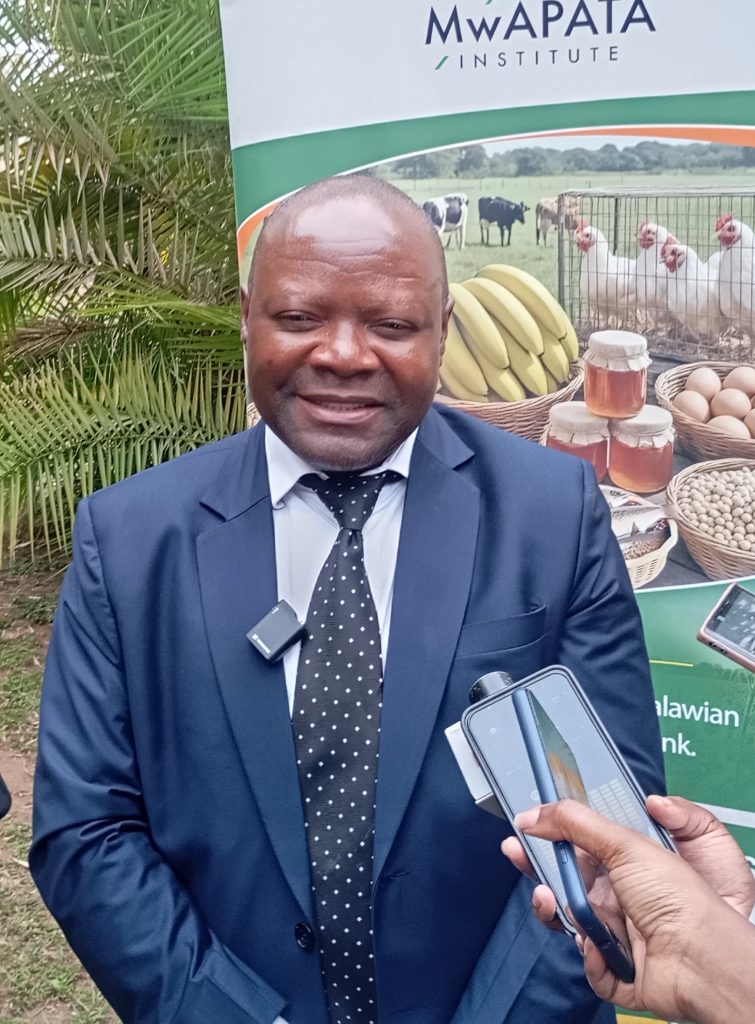
“For soya, in terms of overall production, last year we produced around 193,000 metric tons, and this season we are at around 200,000 to 300,000 metric tons against an installed processing capacity of 800,000 metric tons per annum, which means we are only using about 20% of our processing capacity,” Dr. Nyondo said.
Dr. Nyondo explained that minimum farmgate prices set above global market rates, such as MWK 1,200/kg for soybeans, distort market signals, driving commercial buyers away and pushing trade into informal cross-border channels.
Similar yield and processing gaps plague the rice sector, where 85% of production remains rain-fed and smallholders achieve a national average yield of just 1.4 metric tons per hectare against a research potential of 7.0 metric tons per hectare.
Only 30% of rice farmers use certified seed, while domestic consumption stands at 135,000 metric tons per year against a milling capacity exceeding 150,000 metric tons.
“If we can implement reforms as a package, combining seed systems, extension, and marketing reforms like removing ad-hoc export bans and minimum farmgate prices, we stand to add not less than $30 million to national GDP, lift over 50,000 people out of poverty, and create not less than 7,000 jobs,” Dr. Nyondo added.
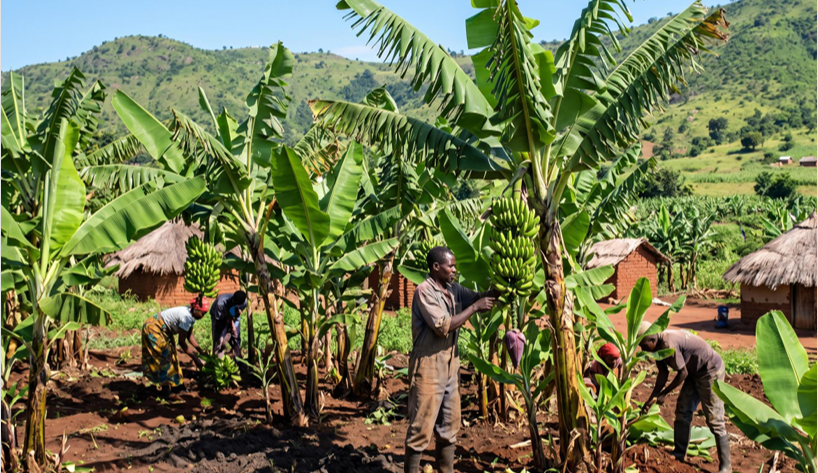
Highlighting the crisis in the banana value chain, Joyce Minofu, Research Analyst and Lead Researcher at the MwAPATA Institute, emphasized that production deficits stem directly from disease shocks, weak seed systems, and limited rural capital.
She explained that following the devastation of the Banana Bunchy Top Virus (BBTV), domestic production leaves a national demand deficit of 16,000 metric tons annually, forcing Malawi to rely on imports from Tanzania and Mozambique.
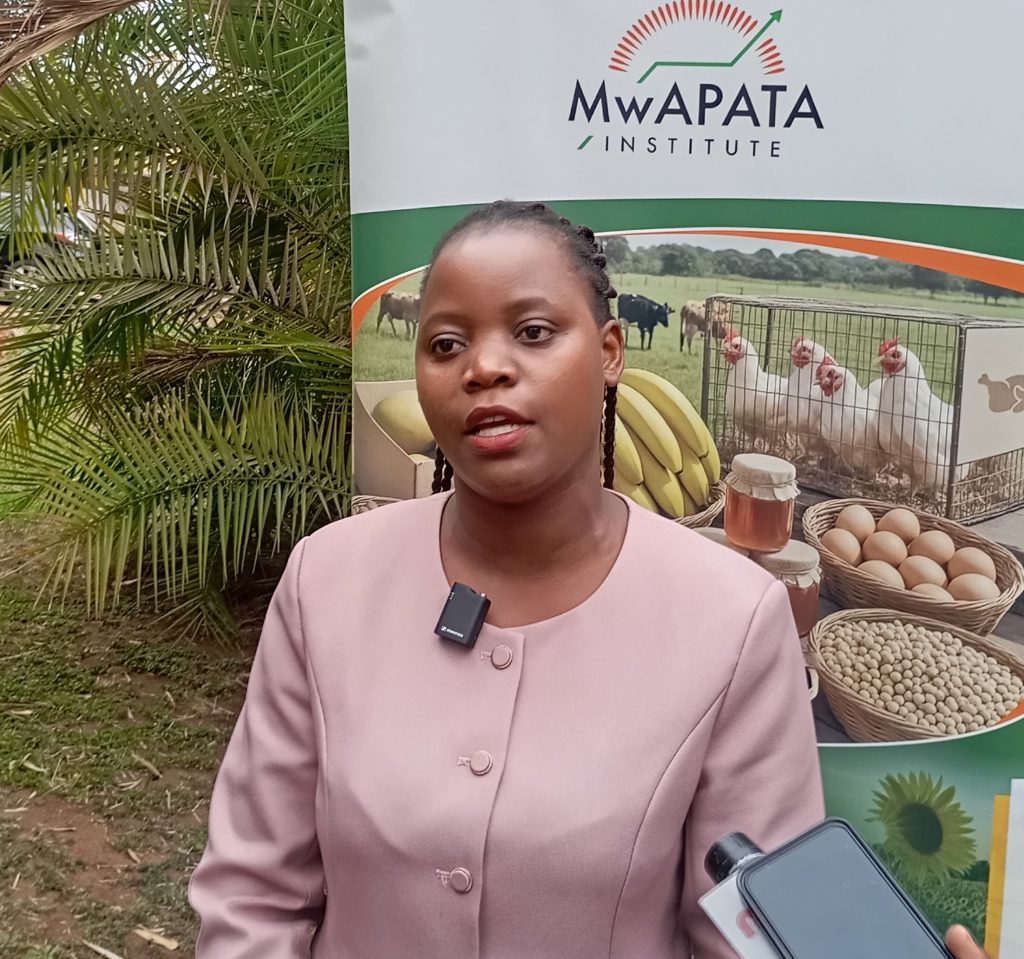
“Banana production has increased by 96% as of 2025 following the devastating effects of the Banana Bunchy Top Virus, but current production is still too low to meet local demand, leaving a gap of 16,000 metric tons that Malawi relies on imports from Tanzania and Mozambique to satisfy,” Minofu said.
Minofu added that setting up a one-hectare banana irrigation scheme requires an initial capital investment of $10,000 to $15,000, an exorbitant amount for smallholders without institutional financing models.
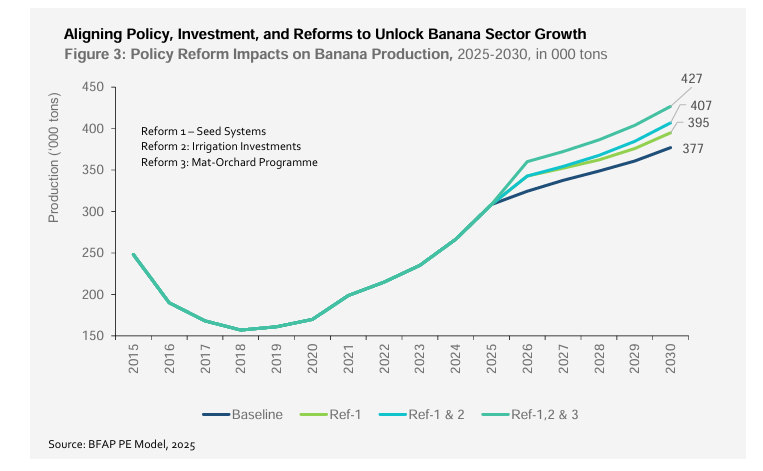
“If we are to implement the three policy package recommendations, improving seed systems through micro-propagation, scaling up blended finance irrigation, and delivering targeted extension services, Malawi can generate an additional $8.1 million in national GDP by 2035, lift 7,445 rural Malawians out of poverty, and increase agricultural labor demand by 19%,” Minofu added.
In his words, William Chadza, Executive Director of the MwAPATA Institute, emphasized that fixing these market distortions and structural gaps is fundamentally tied to rural food security and land management.
“Eighty-five percent of the people who live in our villages can’t eat good food, and this is why it is so important to increase the quality of our food, maximize land utilization under the law, and ensure public and private sector schemes directly support rural communities,” Chadza said.
To reverse these structural losses, MwaPATA the studies suggest that Malawi must move away from short-term market interventions toward predictable, coordinated value-chain investments.
They called for deregulating minimum farmgate price mandates and eliminating ad-hoc commodity export bans to restore market predictability for commercial investors.
Fiscal reforms, such as zero-rating VAT on commercial processing inputs like soybean cake, are also necessary to lower domestic animal feed costs, which currently account for 77% of poultry production expenses.
Long-term transformation will further require establishing blended finance models linking public development projects, financial institutions, and smallholders to fund high-cost drip irrigation infrastructure.
Finally, decentralizing seed multiplication systems to regional hubs will ensure clean tissue-culture banana suckers and certified rice seeds reach farmers directly, unlocking millions in national GDP and lifting thousands of rural households out of poverty.