
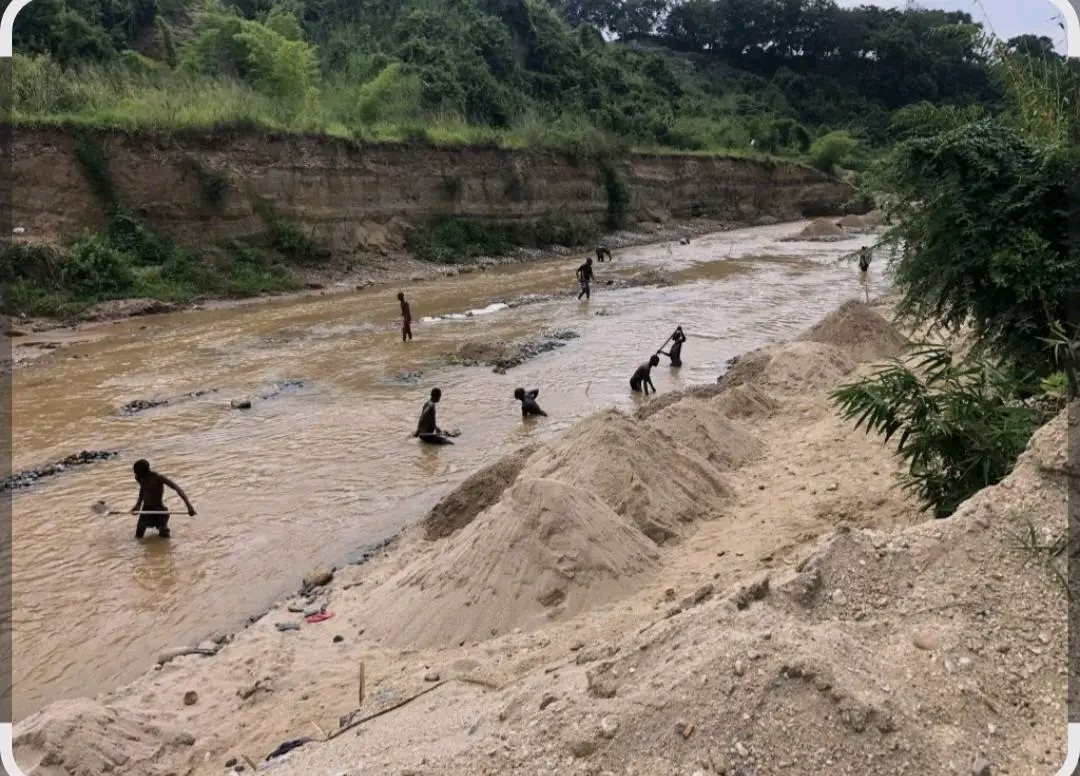

Blantyre, MALAWI – Environmental experts have warned that unregulated sand mining along rivers in Blantyre is increasing erosion and flooding risks and causing the loss of ecosystem services.
Speaking with the Malawi News Agency (MANA) on Thursday, environmental expert Isaac Ndingo Rabson said that riverbanks and river channels are environmentally sensitive areas, and the continuous removal of sand from these zones disturbs the natural structure of the rivers.
“The concern with sand mining is not only the amount of sand being removed, but from an environmental perspective, it is where it is being removed, how frequently it is being removed, and whether the extraction is environmentally controlled,” said Isaac.
He added that unregulated sand mining brings long-term environmental and social costs despite offering short-term income, as riverbank degradation heightens the risks of erosion, flooding, and community conflicts.

“While sand mining provides income for some, continued environmental degradation damages infrastructure, natural resources, and other ecosystem services that communities depend on. People working in or near river channels are exposed to physical hazards, especially during heavy rains and rapidly changing water levels,” said Isaac.
He further said that dealing with destructive sand mining requires an integrated, multi-stakeholder approach that addresses root causes rather than relying on enforcement alone.
“Government, the Council, NGOs, and private-sector partners should equip youth and women’s groups with entrepreneurial and green-economy skills, creating alternative income opportunities and reducing dependence on sand mining,” he said.
Ndingo has therefore called for strengthened environmental awareness and the protection of sensitive river sections where extraction should be prohibited or strictly controlled.
“It is important to strengthen environmental awareness and legal compliance by conducting community awareness campaigns on the relevant environmental and mining laws. Additionally, communities should be connected to environmentally sustainable opportunities such as local eco-tourism, river restoration, recycling, and other green enterprises,” Ndingo said.
Another environmental expert, Charles Bakolo, said that sand extraction along rivers causes huge concerns for aquatic life.

“When sand is extracted without proper regulation from rivers like Nasolo, Mudi, and Limbe, it destabilizes riverbeds and riverbanks and degrades aquatic habitats,” said Bakolo.
Bakolo further said that continued illegal sand mining along rivers will cause long-term water and environmental damage.
“We must recognise that sand does not simply regenerate overnight; once removed beyond the river’s replenishment capacity, the damage remains within the environment and can eventually affect both people and ecosystems,” he said.
Bakolo therefore said that protecting rivers from sand mining needs to be a shared responsibility.
“No single stakeholder can address the problem alone; meaningful progress requires collective responsibility and coordinated action,” said the expert.