


Renowned security expert Master Mfune has attributed the rising cases of abductions and criminal activities in the country to weak and porous border security.
Mr. Mfune’s comments follow recent revelations regarding the abduction of 47-year-old British national Nusrat Osman by a criminal syndicate on September 11, leading to a high-stakes rescue operation in Mpemba on September 17.
According to Mfune, the permeable nature of Malawi’s borders allows foreign criminal networks to infiltrate the country and exploit local vulnerabilities.
“Our borders, Malawi borders, they are porous. As a result, people from Mozambique, Tanzania, Zambia, it’s very easy to come and go out of Malawi. These are the weaknesses that we have as a country,” Mfune said.
He added that foreign criminal networks frequently exploit local economic hardships to recruit and train citizens in illicit operations.
“People take advantage of our warmth, Malawi, the warm heart of Africa, our goodness. They’re taking advantage of that, and they abuse it, and our poverty. The case of the Mozambican and the Malawian from Mangochi, people take advantage of our poverty and they teach and train us how we can make money using illicit means,” Mfune noted.
To address these border lapses, Mfune emphasized the need for a comprehensive security overhaul and enhanced intelligence sharing to counter increasingly sophisticated syndicates.
He noted that law enforcement agencies must strengthen border monitoring mechanisms and adapt their security strategies.
“However, our security is the one which has been weakened maybe around this time, or people are getting more and more sophisticated in the approach, there are certain things which we need to strengthen in terms of security,” he said.
Turning to historical trends, Mfune observed that criminal activities tend to surge during specific political regimes, particularly under Democratic Progressive Party (DPP) administrations.
He called for thorough research to understand the underlying causes of these security fluctuations across different political eras.
“The past regime, the 2014-2019, if you compare to MCP, and if you compare the current regime, it looks like during the DPP era, these crimes, they do increase. Why? It requires us to do some research. Why does it happen like that?” Mfune remarked.
Meanwhile, Master Mfune has hailed Deputy Inspector General of Police (Operations) Dr. Noel Mlowoka Kayira for his bravery after he was shot while exchanging fire with abductors during the rescue of the British national.
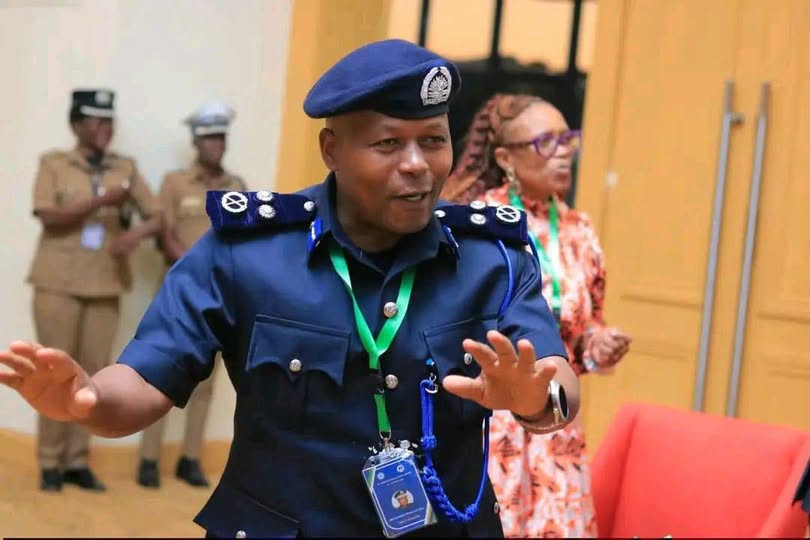
He stated that Dr. Kayira’s direct participation sets a powerful example for junior officers and demonstrates the critical importance of hands-on leadership and experiential learning during high-risk operations.
“To have such a high-profile officer with you on the ground and helping you how you can go about it is a plus. I commend Dr. Noel Kayira for what he did. I would urge a lot of managers, officials, leaders to mentor and coach their subordinates hands-on,” Mfune concluded.