
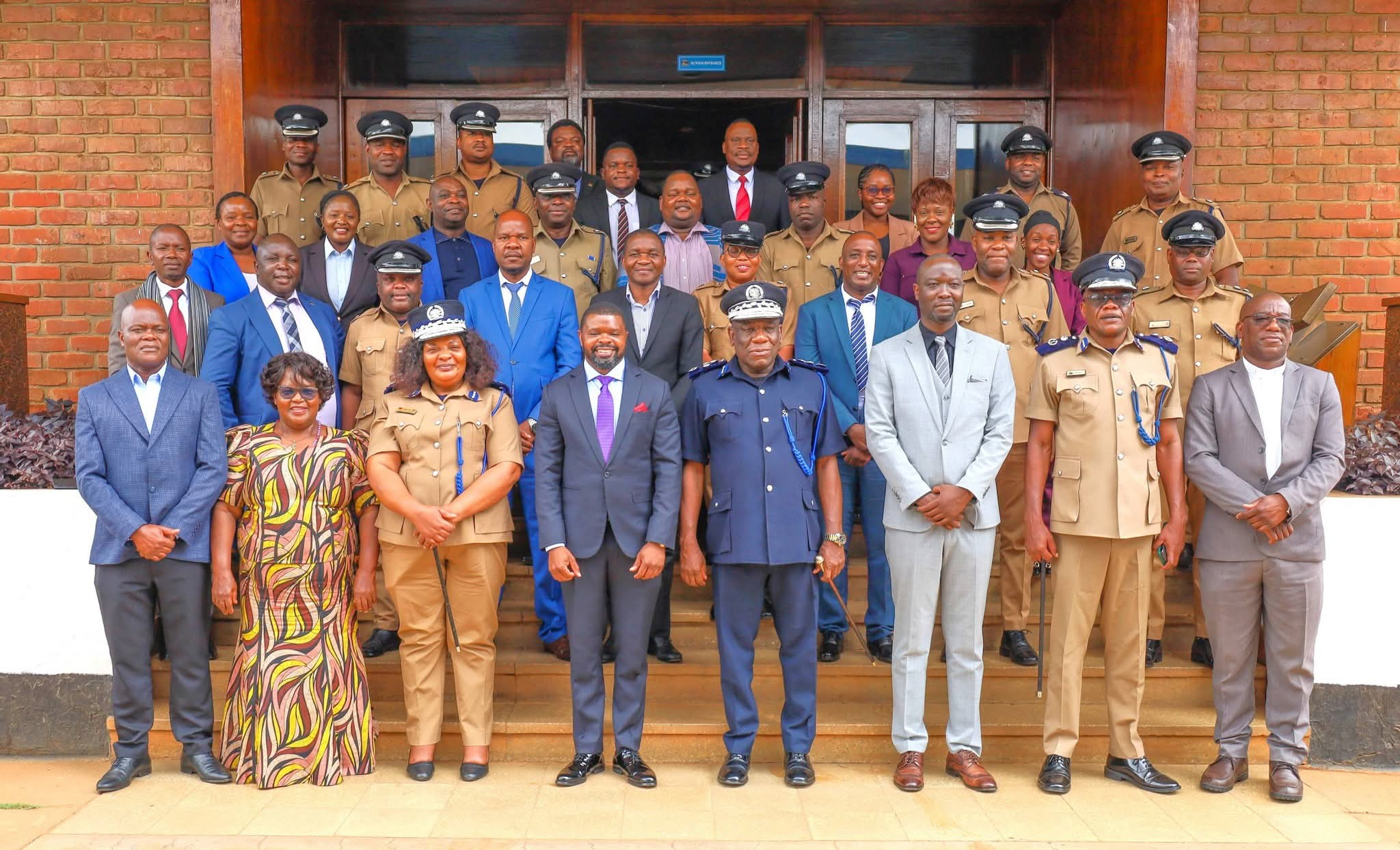


The Malawi Police Service and the Malawi Communications Regulatory Authority (MACRA) are pushing for stronger institutional collaboration to tackle the growing use of digital platforms for fraud, impersonation, misinformation, disinformation and other cyber-related crimes.
The call was made during a joint engagement between the two institutions in Lilongwe, where officials discussed ways of strengthening investigations, sharing expertise and improving Malawi’s response to technology-enabled crime.
Inspector General of Police Richard Luhanga said the growing importance of electronic evidence in criminal investigations makes cooperation between the police and MACRA increasingly necessary.
He said an estimated 40 to 60 percent of cases recorded by the Malawi Police Service now involve some form of electronic or cyber evidence, meaning investigators increasingly need access to digital systems and technical expertise when pursuing cases.
“The meeting has provided an opportunity for the two institutions to identify areas of cooperation, including resources, capacity building, technology and technical expertise because we both have complementary roles in tackling emerging digital crimes,” Luhanga said.
He called for the development of a Memorandum of Understanding (MoU) between the two institutions to provide a formal framework for collaboration.
The proposed partnership would enable the police and MACRA to work more closely in areas including capacity building, information sharing, technical expertise and the investigation of crimes involving digital platforms.
MACRA Board Chairperson’s representative at the meeting, Associate Professor Innocent Kafodya, said the rapid expansion of mobile phones, internet access, mobile money and other digital services had brought significant benefits to Malawians, but had also created opportunities for criminals to exploit technology.

“Criminals are increasingly using mobile phones, social media, mobile money platforms and other digital technologies to defraud people, steal personal information and impersonate legitimate businesses and individuals,” Kafodya said.
He said the two institutions needed to strengthen their capacity to investigate mobile money and cyber-related crimes, trace perpetrators and support efforts to bring offenders to justice.
The engagement also highlighted concerns surrounding the spread of misinformation and disinformation through digital platforms.
MACRA is expected to play a role in promoting responsible use of communication services and increasing public awareness, while the police respond where the use or spread of information is linked to criminal offences or threats to public safety.
MACRA Director General Dr Mayamiko Nkoloma said low levels of digital literacy were contributing to some of the challenges experienced by people in the digital space.
He said some users were engaging with online platforms and digital services without fully understanding how the digital environment works or the risks associated with certain activities.
“We have noted that people go online and do all sorts of things that technology allows them to do without fully understanding the digital ecosystem and that puts them in trouble,” Nkoloma said.
He called for continuous public awareness campaigns to promote responsible digital behaviour and help people understand how they can protect themselves when using mobile phones, social media, mobile money and other digital services.
Nkoloma said users need to understand both what they should and should not do when using digital platforms and services.
The increasing dependence on digital technology has also changed the nature of criminal investigations, with electronic records, mobile devices, online accounts and digital transactions increasingly becoming relevant sources of evidence.
The police and MACRA therefore want their proposed collaboration to go beyond discussions and translate into practical measures for combating technology-enabled crime.
The engagement called for knowledge sharing, capacity building, coordinated resources and stronger institutional mechanisms to improve Malawi’s digital security and protect citizens from criminals exploiting technology.
The proposed cooperation comes at a time when the use of mobile phones, internet services, mobile money and social media continues to expand, increasing the need for users, regulators and law enforcement agencies to understand and respond to emerging risks in the digital space.