
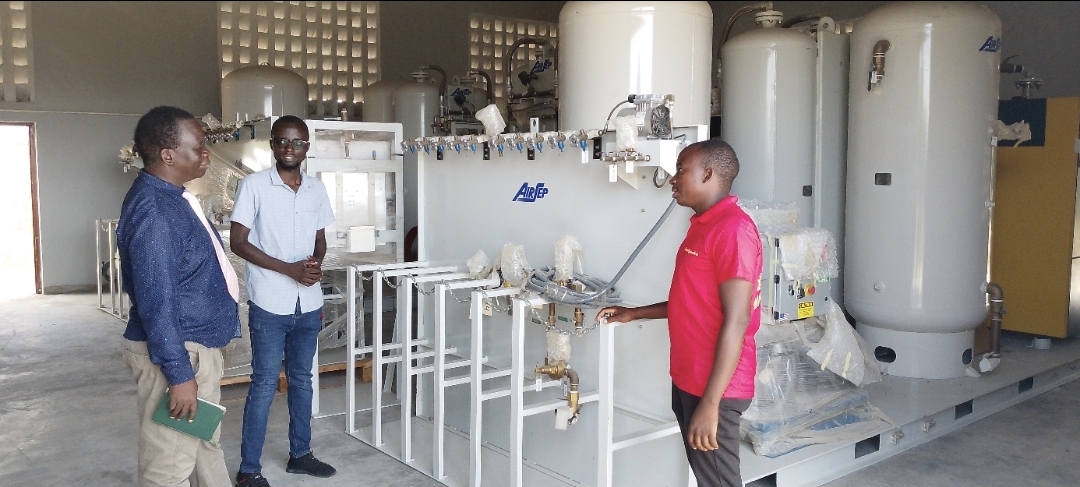


The Malawi Government and health-sector partners have called for sustained investment in medical oxygen to keep the country’s expanding oxygen infrastructure functional and ensure that patients who need the life-saving treatment receive it in time, as the country marked World Oxygen Day at Bwaila Hospital in Lilongwe.
Speaking during the commemoration on Friday, Director of the Presidential Initiative on Maternal Health and Safe Motherhood Ethel Kapyepye said Malawi had moved from relying heavily on privately sourced oxygen during the COVID-19 pandemic to developing its own capacity to produce medical oxygen.
According to Kapyepye, the country now has 14 government-owned oxygen gas plants, alongside eight liquid oxygen systems installed at health facilities across the country.
“As a country, we have come a long way where we used to buy this oxygen from other suppliers, and that was very, very expensive. It was consuming most of our budget, and as a country, we ended up having preventable deaths. But now, we have a unit that is functional, that is able to supply, and I want to say this is a big milestone,” she said.
Kapyepye said lessons from the COVID-19 period had demonstrated the importance of having reliable domestic oxygen production capacity, particularly when demand for oxygen surged across the health system.
She said government has also invested in training biomedical engineers who are responsible for maintaining the oxygen plants, arguing that regular maintenance would be critical to ensuring uninterrupted supply to health facilities.
The government’s 2026 Oxygen Needs Assessment, covering more than 80 facilities, found that 12 of the 14 oxygen gas plants were functional, representing 86 percent functionality.
Kapyepye said the government plans to sustain the functionality of the oxygen plants, liquid oxygen systems and oxygen equipment while strengthening backup power, preventive maintenance and technical capacity.
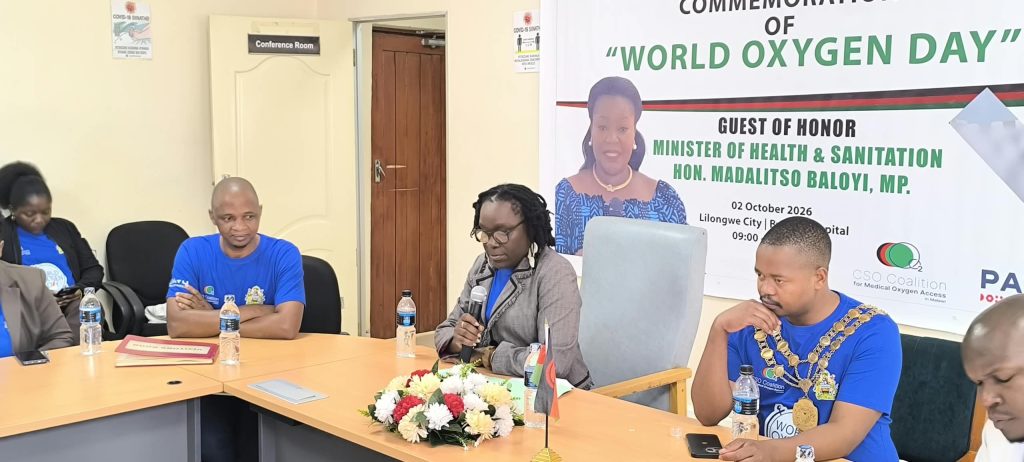
“We want to make sure that if indeed our unit is to supply continuously and regularly, we need to have it maintained, and we have trained biomedical engineers that are taking charge of making sure the unit is functioning. As a country, we have a functional unit where oxygen is being produced. We are supplying to other districts that are getting from us at a fee,” said Kapyepye.
The government says its next Oxygen Roadmap for 2026–2031 will shift the focus towards universal access and sustaining the gains made under the previous roadmap.
Meanwhile, PATH Country Representative and Medical Access Portfolio Leader Raphael Kayambamkadzanja said medical oxygen should be treated as an essential drug because there is no alternative treatment that can replace it for patients who require oxygen.
Kayambamkadzanja said PATH is working with government to strengthen Malawi’s oxygen systems and improve the availability and operation of oxygen-producing facilities.
“We recognize that as a drug, oxygen has no alternative. So, whoever needs oxygen only needs to receive oxygen. Without that, there is no other drug that they can be given to survive. It’s very important for Malawians to know that and we want to encourage people to not say no to oxygen every time it’s been prescribed to them in the hospitals.”
Kayambakadzanja said the organisation will continue working with government over the next four years, with the aim of ensuring that people who require oxygen can access it regardless of the level of health facility where they seek treatment.
He said PATH had also scaled up a medical equipment management information system across the country to improve visibility of equipment and its functionality, allowing government to identify where equipment is available and where repairs or other interventions are required.
In his words, Chairperson of the CSO Coalition on Access to Medical Oxygen in Malawi George Jobe urged government and partners to increase investment and establish a dedicated budget line for medical oxygen.
Jobe said public awareness must also improve because some patients and families continue to hold misconceptions about medical oxygen, including the belief that oxygen can harm or kill patients.
Jobe said patients and families should also feel able to ask health workers for oxygen when they believe a patient is struggling to breathe, while health workers should respond appropriately to such concerns.

According to Jobe, the country’s investment in oxygen production was already helping save money and patients, but warned that more resources would be required to expand and sustain access.
“We have seen that way. We have this plant. It is saving a lot of money and saving a lot of patients. We need more plants. And we also need a designated budget line for medical oxygen in the health budget. For that to happen, we also need to consider increasing the allocation which goes to the health sector according to a budget declaration which states that at least 15% of the national budget should go to the health sector,” he said.
Jobe said sustained financing was necessary to ensure that oxygen remains available when patients need it, arguing that no person should die because medical oxygen or the resources required to provide it are unavailable.
World Oxygen Day is commemorated on 2 October, with this year’s Malawi observance focusing on sustaining the country’s gains in medical oxygen access and ensuring universal availability.